Leak Detection Honolulu: From Inspection to Repair
A water leak rarely announces itself at a convenient time. It may show up as a soft spot near a wall, a water bill that no longer makes sense, a stain under a cabinet, or a sound behind tile that keeps running after every fixture is shut off. In Honolulu, the next step should not be guesswork. Leak detection is part investigation, part code compliance, and part practical judgment about how to repair the problem without creating a larger one.
For homeowners, property managers, restaurants, retail spaces, offices, and building owners, the question is usually simple at first: “Where is the water coming from?” The better question follows close behind: “What is the correct way to fix it?” In Honolulu, plumbing work is not treated casually under local rules. The City and County of Honolulu plumbing code governs the design, installation, alteration, repair, relocation, replacement, addition, use, and maintenance of plumbing systems. That broad scope matters because leak detection often starts as an inspection but can quickly lead to plumbing repair, fixture replacement, drainage work, water-heating work, or sewer-related work.
A qualified plumber Honolulu property owners hire should understand that a leak is not just a wet area. It is a symptom inside a regulated system. The repair may be small, but the responsibility around it is not.
Why leak detection needs more than a quick look
Some leaks are obvious. A supply line under a sink sprays water when the valve is opened. A water heater pan fills. A fixture connection drips in plain sight. Those are the easy calls, though even easy calls still need proper repair.
Other leaks behave differently. Water travels along framing, follows pipe penetrations, runs down the backside of walls, or appears several feet from the actual failed component. A ceiling stain below an upstairs bathroom does not always mean the drain directly above the stain has failed. A damp baseboard near a kitchen may involve a fixture supply, a drain connection, a water-treating device, or another nearby plumbing component. A suspected sewer issue may involve drainage piping rather than pressurized water piping. The point is not to make every leak sound mysterious. The point is that locating water accurately reduces unnecessary demolition and helps the plumber choose a repair that fits the actual failure.
In a Honolulu setting, the inspection-to-repair path also has a regulatory layer. The City and County requires permits for plumbing-related work such as installing, removing, altering, repairing, or replacing plumbing, drainage piping, fixtures, gas appliances, and water-heating or water-treating equipment. Not every wet spot automatically becomes a major permitted project, but the moment work moves into covered plumbing activities, the local code and permit requirements need to be considered. A responsible plumber Oahu customers rely on should be willing to talk plainly about that line instead of treating permits as an afterthought.
The first call: what a plumber needs to know
When someone searches “plumber near me” during an active leak, the first instinct is to ask how fast someone can arrive. Speed matters, especially when water is still running. Still, the information shared on that first call can shape the response. A plumber can prepare better when the caller explains whether the leak is active or intermittent, whether water is clean or waste-related, whether any shutoff valves have been used, and whether the leak is near a water heater, fixture, wall, ceiling, slab, or commercial equipment.
The most useful conversations are specific without becoming technical. “There is water under the sink only when we run the faucet” means something different from “the cabinet is wet even when no fixture is being used.” “The ceiling drips after the upstairs shower runs” differs from “the ceiling stain is growing overnight.” “The water heater area is wet” should immediately raise different repair questions than a slow drain or suspected sewer issue. In practice, these details help determine whether the situation calls for an emergency plumber response or a scheduled diagnostic visit.
If water can be safely shut off before the plumber arrives, damage may be reduced. If the leak involves electrical hazards, wastewater, gas appliances, or water-heating equipment, the situation deserves extra caution and professional handling. Honolulu’s Department of Planning and Permitting states that electrical and plumbing work must be performed by contractors licensed by the State of Hawaii. That is not a small administrative point. It protects the property owner, the building, and the public systems tied to private plumbing.
Inspection before repair
Good leak detection begins with restraint. It is tempting to open walls immediately, especially when water stains create pressure to “do something.” Sometimes access is necessary. But a disciplined inspection starts by narrowing the possibilities. The plumber looks at fixture use, visible piping, valves, drains, water-heating equipment, water-treating equipment, and the building area affected. The goal is to separate a plumbing leak from other sources of moisture and then identify the plumbing component involved.
That inspection may involve checking fixture behavior, observing when water appears, isolating sections where practical, and looking for signs that point to supply, drainage, or equipment-related failure. A supply leak may show itself even when fixtures are not in use. A drain leak may appear only when a sink, tub, shower, or appliance discharges. A water heater issue may involve the heater, nearby piping, valves, or associated equipment. Sewer line repair questions may arise when the problem is tied to wastewater movement rather than clean water distribution.
This is where experience changes the outcome. A less careful approach treats every stain as a reason to cut. A better approach asks what changed, when the water appears, what plumbing components are nearby, and whether the suspected repair falls under permit requirements. In Honolulu, plumbing code applies not only to installation but also to alteration, repair, relocation, replacement, addition, use, and maintenance. That means the inspection should be connected to a repair plan that can stand up to local expectations.
From finding the leak to defining the repair
Leak detection is not complete when the wet area is identified. The repair still has to be chosen. A plumber may find a failed fixture connection, damaged piping, a drainage issue, a water heater-related failure, or a problem connected to water-treating equipment. Each path has different implications. Some repairs are direct and limited. Others require removing and replacing plumbing components, altering drainage piping, or coordinating with building management in a commercial setting.
The City and County of Honolulu requires permits for many kinds of plumbing-related work, including installing, removing, altering, repairing, or replacing plumbing, drainage piping, fixtures, gas appliances, and water-heating or water-treating equipment. Because of that, repair planning should include a permit discussion when the scope fits those categories. A professional plumber should not wait until the job is half open to bring it up.
There is also a difference between stopping water temporarily and completing a code-conscious repair. A temporary control measure may protect a property while the proper work is planned. A permanent repair needs to address the failed component correctly. Property owners sometimes want the least invasive path, which is understandable. But the least invasive path is not always the best path if it leaves compromised piping, a questionable fixture connection, or a drainage issue unresolved.
Licensing is part of the repair, not paperwork on the side
Honolulu’s Department of Planning and Permitting is clear that https://reidsroc627.pinehavenscope.com/posts/commercial-plumber-projects-and-hawaii-licensing-requirements plumbing work must be performed by contractors licensed by the State of Hawaii. The state also has a professional licensing system that includes a dedicated Board of Electricians and Plumbers, and there is an online database where license status, expiration dates, and disciplinary history can be checked. For a property owner, that makes verification practical. You do not have to rely only on a logo, a truck, or a confident phone call.
The Honolulu plumbing code also allows the authority having jurisdiction to verify that inspected work was performed by a licensed plumbing journey worker and/or contractor. That is important when leak repair becomes inspected work. If a repair involves covered plumbing activity, the person doing the work matters. So does the contractor responsible for it.
A licensed contractor brings more than tools. They bring accountability to the system. That matters in single-family homes, condominiums, commercial kitchens, offices, hospitality spaces, and multi-tenant buildings. When a leak affects more than one unit or interrupts business operations, the repair record and compliance trail can become just as important as the repair itself.
When the leak points to a drain, sewer, or wastewater issue
Not every leak involves pressurized water. Some of the most disruptive calls begin as a drain cleaning request, a backed-up fixture, or moisture near a drain line. If the issue involves drainage piping or sewer-related work, the repair may fall into a different category from a simple fixture supply leak. Honolulu wastewater guidance emphasizes protecting sewer infrastructure and notes that sewer connection and related wastewater issues involve city review and permitting processes.
That does not mean every slow drain is a sewer project. It means a plumber should know when a drain cleaning call is just a service issue and when symptoms suggest something more serious in the drainage or sewer system. Sewer line repair requires careful judgment because private plumbing connects to larger public wastewater infrastructure. Work that affects that connection or related systems cannot be treated like an isolated household inconvenience.
For property owners, the practical lesson is to describe the symptoms accurately. Water coming from a clean supply line is different from wastewater appearing near a floor drain. A recurring drainage problem is different from a one-time clog. A commercial property with multiple fixtures affected may need a different response than a single bathroom sink draining slowly. A commercial plumber should be especially careful here because business plumbing systems often carry heavier use and higher consequences when drainage fails.
Water heater leaks deserve prompt attention
Water heater repair is one of the service areas where leak detection and code compliance often meet quickly. A wet area near a water heater may involve the tank, nearby piping, valves, connections, water-heating equipment, or related components. The City and County permit rules expressly include work involving water-heating equipment, including installing, removing, altering, repairing, or replacing it.
That does not mean every observation around a water heater requires the same repair. It does mean a water heater leak should not be dismissed as “just a drip” without inspection. Water-heating equipment ties into plumbing systems and, depending on the situation, may involve additional safety considerations. In Honolulu, where plumbing work must be performed by properly licensed contractors, the repair path should respect both the equipment and the rules that apply to it.
A common mistake is focusing only on the puddle. The better inspection asks where the water originates, whether the leak appears during heating cycles or fixture use, whether nearby piping is involved, and whether repair or replacement is appropriate. The cost difference between a minor repair and equipment replacement can be significant, so diagnosis matters. But so does timing. A leak that starts small may create more damage if ignored.
What property owners can do before the plumber arrives
There is a narrow but useful role for owners, tenants, or managers before professional help arrives. The goal is not to perform plumbing work. The goal is to reduce damage, preserve information, and avoid unsafe conditions.
- If it is safe and you know the correct valve, shut off water to the affected fixture or area.
- Move belongings away from the wet area and protect flooring where possible.
- Take photos of visible water, stains, fixtures, and nearby equipment before cleanup.
- Note when the leak appears, such as after a shower, during sink use, overnight, or continuously.
- Avoid opening walls, altering piping, or disturbing water-heating, drainage, gas, or wastewater components yourself.
Those steps give the plumber better information and may reduce property damage. They also help avoid a common problem: by the time a technician arrives, the visible water has been wiped away and no one can say when it appeared. Photos and timing notes often shorten the diagnostic process.
Residential leak detection versus commercial leak detection
Residential leak detection usually starts with a contained problem: a kitchen cabinet, bathroom ceiling, laundry area, water heater closet, or exterior service area. The household wants water restored and damage limited. Communication is direct, and access is usually controlled by the owner or tenant.
Commercial leak detection can be more complicated. A commercial plumber may need to coordinate with managers, tenants, maintenance staff, and sometimes other trades. Work may affect business hours, restrooms, food service areas, tenant spaces, or customer access. Larger commercial developments may also involve more complex water-service and permitting considerations. Honolulu’s Board of Water Supply handles water-service and permitting-related matters for projects, and large commercial developments often require master plans and more complex review of water-system capacity.
That broader review is not part of every leak repair. A small fixture leak in a commercial restroom is not the same as a large development project. Still, commercial properties often sit within more complex plumbing and water-service relationships. When a leak repair expands into alteration, replacement, added demand, or larger system work, it is wise to involve a plumber who understands when the Board of Water Supply, city permitting, or additional review may be relevant.
Commercial owners also tend to face a different kind of pressure. Downtime costs money. Restroom closures affect customers and employees. Water damage may interrupt operations. The temptation is to make the fastest repair possible, but speed without proper licensing, permits, and code awareness can create larger problems later. A professional repair should balance urgency with compliance.
The permit conversation: when small jobs become regulated work
Permits can feel confusing because leak detection starts with uncertainty. At the beginning, no one may know whether the repair will involve replacing piping, altering drainage, changing fixtures, or working on water-heating equipment. That is why the permit conversation often belongs after the inspection but before the repair proceeds.
Honolulu’s permit requirements cover plumbing-related work such as installing, removing, altering, repairing, or replacing plumbing, drainage piping, fixtures, gas appliances, and water-heating or water-treating equipment. The categories are broad. A plumber should explain whether the proposed work appears to fall within them and how the job should proceed.
There are practical reasons to take this seriously. Permitted work can be reviewed and inspected where required. The authority having jurisdiction can verify that inspected work was performed by a licensed plumbing journey worker and/or contractor. If property owners skip the process when it applies, they may create problems during future inspections, ownership changes, insurance discussions, tenant disputes, or additional repairs.
The best contractors do not use permits as scare tactics. They treat them as part of the job. They explain what is known, what is not yet known, and what decisions depend on opening an area or confirming the failed component. That kind of communication builds trust because it respects both the customer’s budget and the public rules that govern plumbing systems.
How a careful plumber talks through options
Once the leak is found, a good plumber should be able to describe the condition in plain language. The explanation does not need to be theatrical. It should answer what failed, what repair is recommended, whether the repair involves covered plumbing work, what access is needed, and whether related components should be evaluated.
There are often trade-offs. A limited repair may cost less now but leave older nearby components in place. A broader replacement may be more disruptive but reduce the chance of returning to the same area soon. Opening a wall may feel excessive until the plumber explains that the actual failed connection cannot be repaired properly from the visible side. On the other hand, unnecessary demolition should be avoided when testing and observation can narrow the source first.
In older or heavily used systems, judgment matters. A plumber may find that the visible leak is only one part of the problem. A drainage issue may begin as drain cleaning but reveal conditions that call for sewer line repair. A water heater leak may involve equipment that needs more than a fitting adjustment. A commercial leak may expose a repair need that affects more than one tenant. The correct answer is not always the cheapest or the most expensive option. It is the option that fixes the cause, complies with the applicable rules, and matches the risk of the property.
Warning signs that deserve faster service
Some leaks can be scheduled promptly but calmly. Others justify an emergency plumber call because delay may increase damage, create sanitation concerns, or interrupt essential building use. Water that continues to flow after fixtures are shut off, water near electrical systems, wet ceilings that are actively dripping, leaks involving water-heating equipment, wastewater backups, and leaks that affect multiple units or commercial operations all deserve urgency.
A property manager may define “emergency” differently from a homeowner. If a leak closes a restaurant restroom, affects a medical office, or damages a retail space during business hours, the business impact can be immediate. For a homeowner, an active ceiling leak at night feels just as urgent. The response should match the risk, not just the clock.
When calling for emergency service, be direct about conditions. Say whether water is actively flowing, whether shutoff valves have been tried, whether wastewater is involved, and whether the property is residential or commercial. That helps the plumber arrive prepared and helps the dispatcher decide how to prioritize the call.
Choosing a plumber in Honolulu or on Oahu
The phrase “plumber near me” may bring up a long list of names, but proximity alone should not decide who works on a regulated plumbing system. In Honolulu, plumbing work must be performed by contractors licensed by the State of Hawaii. License verification is available through the state system, including status, expiration dates, and disciplinary history. That makes the first screening step straightforward.
A property owner should also look for communication habits. Does the plumber ask diagnostic questions or jump straight to a price without understanding the leak? Do they discuss permits when the proposed repair involves plumbing, drainage piping, fixtures, water-heating equipment, or water-treating equipment? Can they explain whether the work is a simple repair, a larger replacement, or a sewer or wastewater-related issue that may involve city review?
A reliable plumber Honolulu residents hire for leak detection should be comfortable working from inspection to repair. That means they do not treat detection as a separate trick or repair as a blind patch. They connect the two. The same applies across the island. A plumber Oahu emergency plumber property owners depend on should understand local licensing expectations, Honolulu code requirements when working within the City and County, and the practical differences between residential and commercial plumbing calls.
Questions worth asking before work begins
A short conversation before authorizing repair can prevent misunderstandings later. The questions do not need to be adversarial. They simply clarify scope, responsibility, and compliance.
- Are you licensed in Hawaii for this plumbing work?
- Does this repair require a permit under Honolulu requirements?
- What component do you believe is leaking, and how did you confirm it?
- Will the repair involve plumbing, drainage piping, fixtures, water-heating equipment, or water-treating equipment?
- If inspection is required, who is responsible for coordinating it?
These questions are especially useful when the repair involves more than tightening a visible connection. They also help separate professional contractors from people who avoid accountability. A qualified plumber should not be offended by basic licensing and permit questions.
Repair is only finished when the system is fit for use
A leak repair should end with more than dry flooring. The repaired area should be tested as appropriate for the type of leak. Fixtures should be run when the issue involves drainage. Pressurized piping should be checked after repair. Water-heating equipment should be evaluated within the limits of the work performed. If the repair required inspection, the process should be followed. If wastewater or sewer connection issues were involved, city review and permitting processes may be part of the path.
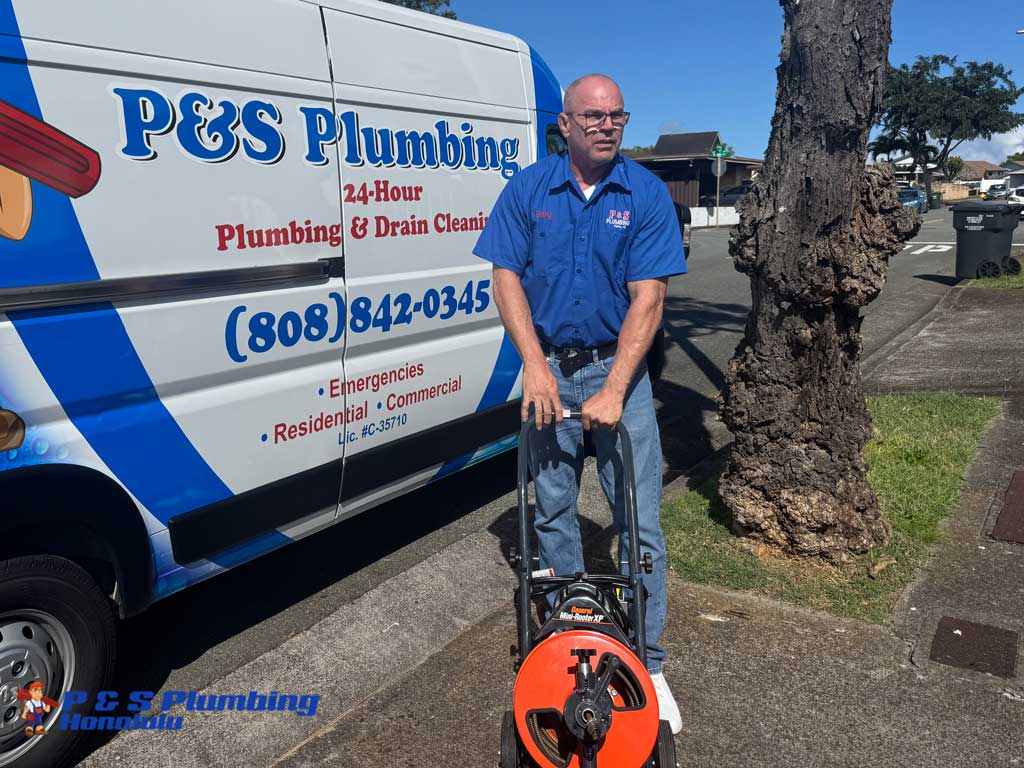
The City and County plumbing code covers the use and maintenance of plumbing systems, not only their original installation. That matters because a repaired system returns to everyday service. People will run showers, cook, clean, operate businesses, serve customers, and rely on hot water. The work has to hold up under normal use.
Good plumbers tend to leave customers with practical direction. They explain what was repaired, what signs would justify a callback, and whether additional work should be planned. They do not bury important concerns in vague language. If an older component is still in service but may need future attention, the customer should know. If the repair was limited because access or authorization was limited, that should be clear too.
The value of doing it right the first time
Leak detection in Honolulu is not just about finding hidden water. It is about moving from uncertainty to a lawful, durable repair. The process begins with observation, continues through diagnosis, and ends with work performed by properly licensed professionals under the rules that apply to plumbing systems in the City and County of Honolulu.
For small leaks, that may feel like more structure than necessary. But plumbing systems connect private property to shared water and wastewater infrastructure. A poor repair can damage walls, floors, fixtures, neighboring units, commercial operations, and public systems. A correct repair protects more than the room where the leak appeared.
Whether the call begins as leak detection, drain cleaning, water heater repair, sewer line repair, or an emergency plumber request, the same principles apply. Identify the source before opening more than necessary. Use a licensed plumber. Discuss permits when the work involves covered plumbing activities. Respect the difference between a temporary stop and a permanent repair. In Honolulu, that approach is not just good workmanship. It is the responsible way to care for a plumbing system.
Name: P&S Plumbing
Address: 1714 Homerule St Bay 1, Honolulu, HI 96819, United States
Phone: 808-842-0345
Website: https://www.psplumbinghawaii.com/locations/honolulu/
Email: [email protected]
Hours:
Sunday: Open 24 hours
Monday: Open 24 hours
Tuesday: Open 24 hours
Wednesday: Open 24 hours
Thursday: Open 24 hours
Friday: Open 24 hours
Saturday: Open 24 hours
Time zone: Hawaii-Aleutian Time
Open-location code / Plus code: 84F8+HP Honolulu, Hawaii, USA
Map/listing URL: https://www.google.com/maps/search/?api=1&query=Google&query_place_id=ChIJl_3qEMhvAHwRtgTEMKE27zE
Embed iframe:
Socials:
https://www.facebook.com/psplumbinghonolulu/
https://x.com/PSPlumbingoahu
https://www.youtube.com/@PSPlumbingHonolulu/
https://soundcloud.com/p-s-plumbing-honolulu
P&S Plumbing provides plumbing services from its Honolulu location on Homerule Street.
The official Honolulu page lists drain cleaning, plumbing repairs, water heater repair, water heater installation, sewer line repair, and 24-hour emergency plumbing services.
P&S Plumbing serves residential and commercial customers across Honolulu and Oahu, including Kalihi, Kakaako, Ala Moana, Waikiki, Moiliili, Makiki, Manoa, Aliamanu, Aiea, Pearl City, Waipahu, Ewa Beach, Kapolei, Hawaii Kai, and nearby communities.
The Honolulu shop is listed at 1714 Homerule St Bay 1, Honolulu, HI 96819, near Kalihi and local routes serving central Honolulu.
The official website lists Hawaii State License Number CT-35710 and describes the company as licensed and insured.
Customers can contact P&S Plumbing for drain cleaning, hydro jetting, leak detection, water heater service, sewer line repair, fixture repair and installation, kitchen plumbing, bathroom plumbing, commercial plumbing, residential plumbing, and emergency plumbing needs.
For plumbing service in Honolulu and Oahu, call 808-842-0345 or visit https://www.psplumbinghawaii.com/locations/honolulu/
The public map listing uses plus code 84F8+HP Honolulu, Hawaii, USA and can help customers find P&S Plumbing near Homerule Street in Honolulu.
Popular Questions About P&S Plumbing
What does P&S Plumbing provide in Honolulu?
P&S Plumbing provides drain cleaning, plumbing repairs, water heater repair and installation, sewer line repair, hydro jetting, leak detection, fixture repair and installation, bathroom plumbing, kitchen plumbing, residential plumbing, commercial plumbing, and 24-hour emergency plumbing services.
Where is P&S Plumbing located in Honolulu?
P&S Plumbing is listed at 1714 Homerule St Bay 1, Honolulu, HI 96819, United States. The official website also lists the address as 1714 Homerule Street 1, Honolulu, HI 96819.
What phone number should Honolulu customers call?
The official Honolulu page and contact page list 808-842-0345 for Honolulu-Oahu service.
What is the email address for P&S Plumbing?
The email address is [email protected].
What are P&S Plumbing’s Honolulu hours?
The official Honolulu page and supplied listing show P&S Plumbing as open 24 hours a day, seven days a week, Hawaii-Aleutian Time.
Is P&S Plumbing licensed?
The official Honolulu page lists Hawaii State License Number CT-35710. Customers can confirm license status directly with the relevant Hawaii licensing authority before hiring.
Does P&S Plumbing offer emergency plumbing in Honolulu?
Yes. The official Honolulu page lists 24-hour emergency plumbing services for urgent plumbing issues.
Does P&S Plumbing handle water heaters?
Yes. The official Honolulu page lists water heater repair, water heater installation, tankless water heater installation, solar water heater installation, and traditional water heater installation.
Does P&S Plumbing provide commercial plumbing?
Yes. The official Honolulu page lists commercial plumbing services along with residential plumbing services.
How do I contact P&S Plumbing?
Call 808-842-0345, visit https://www.psplumbinghawaii.com/locations/honolulu/, or use the map URL: https://www.google.com/maps/search/?api=1&query=Google&query_place_id=ChIJl_3qEMhvAHwRtgTEMKE27zE. Social profiles: Facebook, X, YouTube, and SoundCloud.
Landmarks Near Honolulu, HI
Homerule Street: The street listed for P&S Plumbing’s Honolulu location and a practical reference point for finding the shop.
Kalihi: A central Honolulu area near Homerule Street with homes, businesses, warehouses, and local service routes.
Dillingham Boulevard: A major nearby corridor serving Kalihi, Iwilei, Honolulu Harbor, and surrounding business areas.
Nimitz Highway: A key Honolulu route connecting the airport, harbor, downtown, and central business districts.
H-1 Freeway: A major Oahu highway used to reach Honolulu neighborhoods and communities across the island.
Honolulu Harbor: A major commercial waterfront landmark near downtown and industrial service areas.
Daniel K. Inouye International Airport: A major transportation landmark west of central Honolulu and near key Oahu service routes.
Downtown Honolulu: A central business and residential district served by local plumbing contractors.
Chinatown Honolulu: A nearby historic district with restaurants, shops, apartments, and older plumbing infrastructure.
Iwilei: A nearby commercial and industrial area with warehouses, retail properties, and service businesses.
Kakaʻako: A growing residential, retail, and commercial district southeast of downtown Honolulu.
Ala Moana Center: A major Honolulu retail landmark and citywide reference point.
Waikiki: A major visitor, hotel, condo, and residential area within P&S Plumbing’s broader Honolulu service area.
Moanalua: A Honolulu community listed within P&S Plumbing’s broader Oahu service-area references.
Pearl Harbor area: A major Oahu landmark west of Honolulu and near residential and commercial service routes.
For drain cleaning, plumbing repairs, water heater service, sewer line repair, hydro jetting, leak detection, fixture installation, commercial plumbing, residential plumbing, or 24-hour emergency plumbing near these Honolulu and Oahu landmarks, contact P&S Plumbing at 808-842-0345 or visit https://www.psplumbinghawaii.com/locations/honolulu/
Corrections
Spot something wrong? Send it to the desk and it gets fixed in the open.